 Skip to content

Classical Education
The Classical Tradition at Trinity
You’ve heard the term, but what does it look like inside the classroom? Discover how our classical model shapes your child’s daily experience—forming young adults who evaluate complex ideas, seek truth, and speak with uncommon clarity.
Our Approach
Education That Lasts
At Trinity, classical education is a deliberate, time-honored way of forming minds. It teaches students to read carefully, reason soundly, and form their own considered judgments. Rather than memorizing content for a test, students learn how to think: wrestling with primary sources, weighing arguments, and articulating their convictions with clarity and poise. These intellectual habits extend far beyond the classroom into every area of life. For more than 40 years, this approach has remained the bedrock of our culture of learning.

Our Mission
Truth, Goodness, Beauty
Trinity was founded on the conviction that a complete education must awaken intellect, form character, and cultivate wonder. We fulfill our mission by immersing students in an authentic culture of learning defined by three fundamental pursuits:
Discovery of Truth
Students learn to investigate reality and seek truth wherever it is found—in divine revelation, the natural world, and the breadth of human achievement. Through rigorous inquiry and Socratic dialogue, they cultivate intellectual clarity and a lifelong love for truth.
Practice of Goodness
Because intellectual growth is inseparable from moral character, we train students to recognize, desire, and defend what is genuinely good. Supported by a wholesome culture of mutual respect, they develop concrete habits of virtue and grow into morally and spiritually serious young adults.
Creation of Beauty
A complete education awakens the imagination to what is noble, lovely, and worthy of praise. Through required study in studio art, choral music, and drama every student learns to recognize authentic beauty and develops the craftsmanship to create it.
Our Environment
Formed to Think and Lead
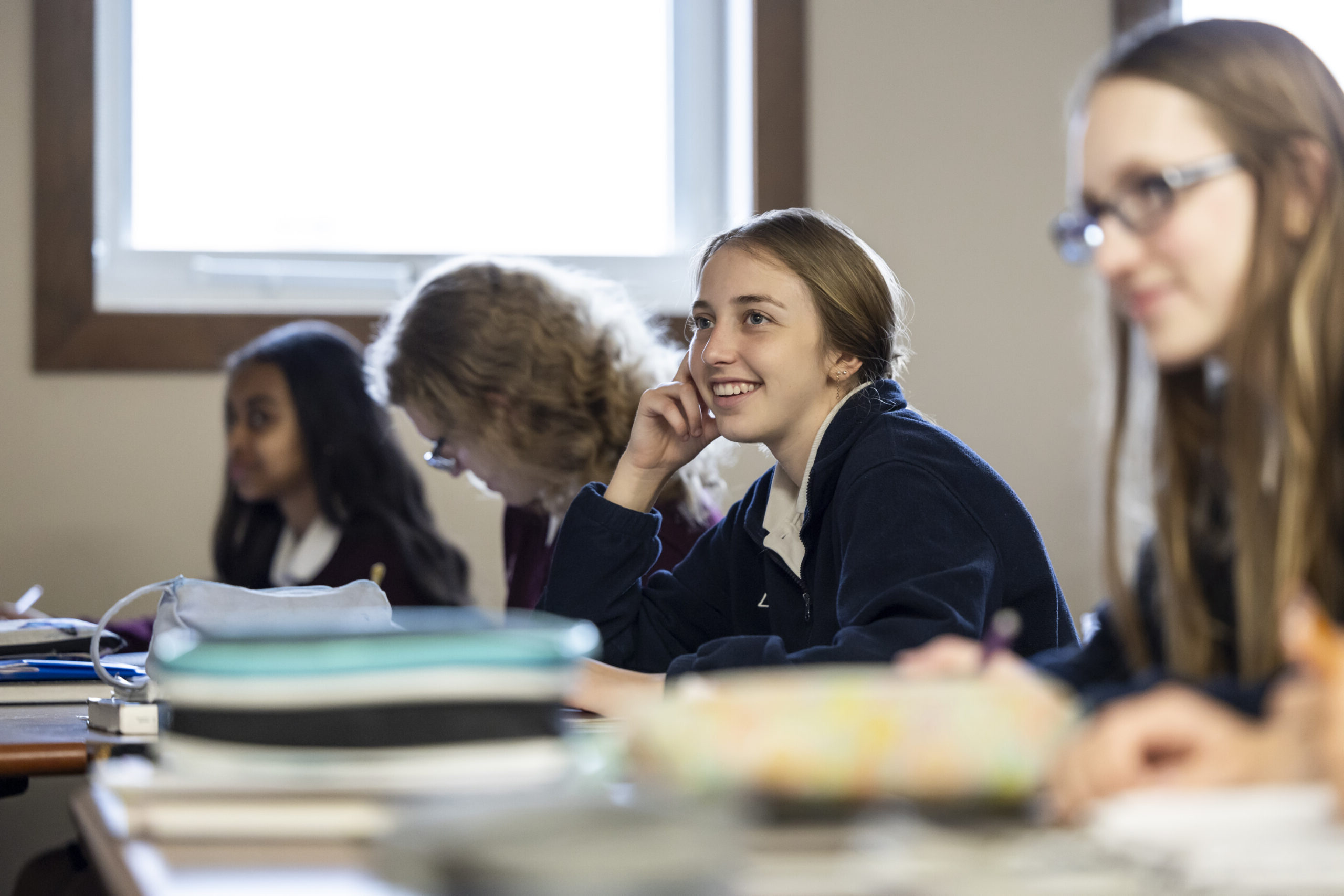
Trinity's classical education requires an active classroom—not rows of passive students taking notes, but a room where young people are expected to speak, question, and defend their thinking. In single-sex classes with a 9:1 student-to-faculty ratio, social posturing falls away. Students are known by name and free to take intellectual risks without self-consciousness.
This culture culminates in our two-hour daily Humane Letters seminars, where high school students discuss original texts from Augustine to Shakespeare. Students are never told what to think; they learn to wrestle with ideas out loud, with their reasoning on the table. The goal is not merely a graduate who has read the right books, but an articulate, confident thinker prepared to lead and problem-solve in any field they enter.

See the Approach in Practice
The best way to understand classical education is to see exactly what students read, study, and do. Browse the curriculum, walk through the course guide, or explore the reading list that runs through all seven years.