 Skip to content

Classroom Model
How We Learn: Focused Classrooms, One Vibrant Community
We believe students ask better questions, take greater risks, and think more deeply when the classroom is built for focus. By pairing small class sizes and single-sex instruction with a phone-free day, Trinity removes social distractions inside the classroom while nurturing one shared co-ed community outside of it. Here is what that intentional approach looks like in practice.
Small Classes
Deeply Known. Truly Challenged.
Here, small class sizes are more than a ratio—they shape the entire culture of learning. Teachers have the time and care to understand how your child thinks, where they need support, and how to stretch their gifts. The result is a welcoming, purposeful community where your child is truly known, challenged, and inspired to thrive.


Single-Sex Classes
Academic Focus. Authentic Community.
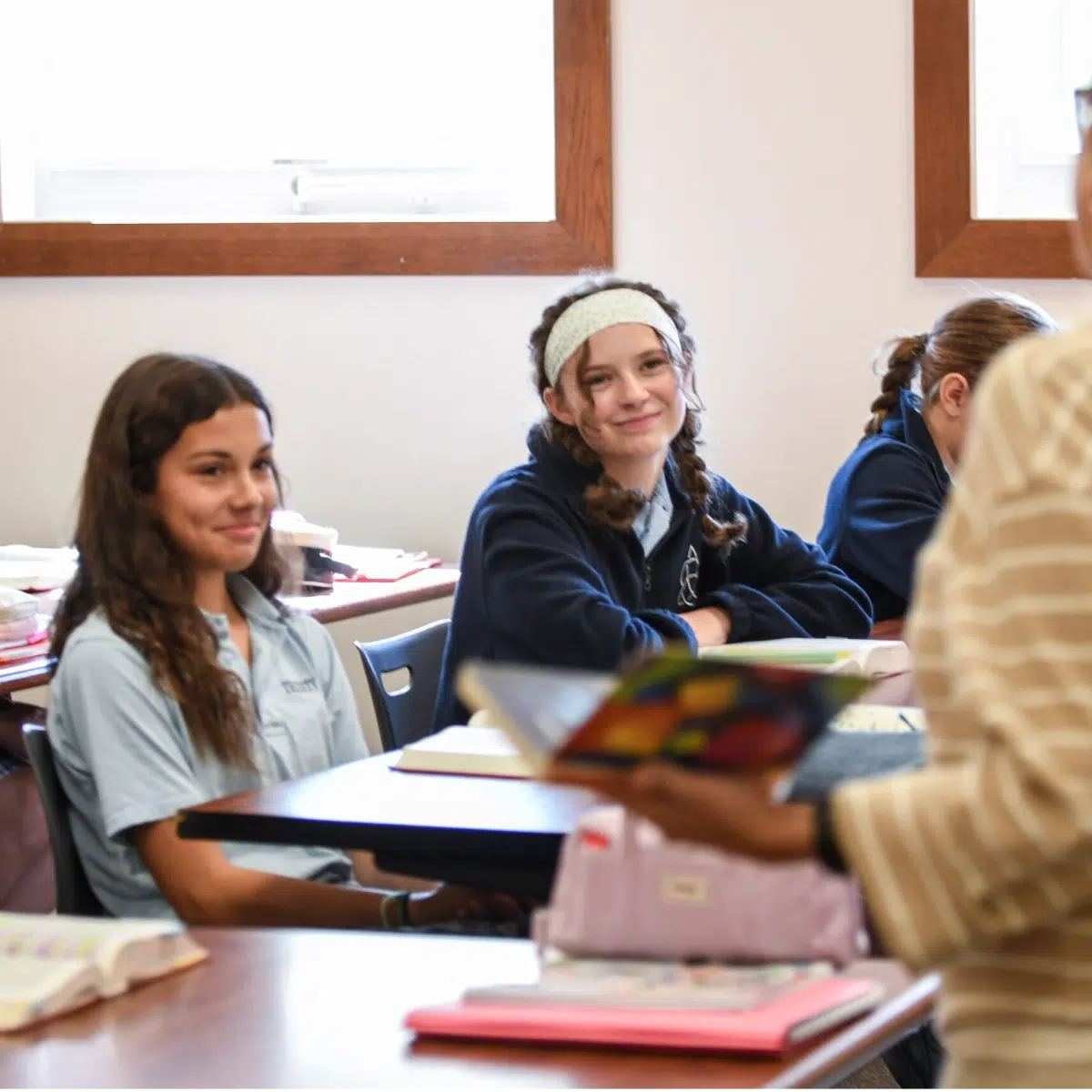
When students learn free from the social pressures of impressing the opposite sex, the entire classroom dynamic opens up. Instead of holding back out of hesitation or self-consciousness, your child finds the freedom to think out loud—to offer a half-formed idea, wrestle with a challenging text, or ask the bold question. That courage is where genuine intellectual formation begins. Outside the classroom, our community remains fully co-ed. Young men and women share every tradition, extracurricular, fine art, and celebration together. Single-sex classrooms remove the distraction; our shared community builds lasting, wholesome friendships.
Phone-Free Learning
Phone-Free Days. Real Conversation.
Meaningful learning requires full presence. At Trinity, students put their phones away for the school day because a student wrestling with Dostoevsky in a Humane Letters seminar cannot be half-somewhere-else. Free from digital distraction, our classrooms become places of genuine encounter—where students engage face-to-face with big ideas, intentional mentors, and one another. The habit of deep attention doesn't end at the final bell; parents often find that the spirited discussions begun in class naturally carry over to the family dinner table.


Academics
Students Learn How to Think, Not What to Think
Trinity students read primary texts, conduct lab experiments, translate Latin, study Scripture, and debate their way through history and literature every day. The classical method equips students with the tools of learning, preparing them to embrace challenges and nurture a lifelong love of learning.
Trinity Graduates are Equipped for Higher Education
The habits of inquiry, discipline, and depth nurtured at Trinity prepare our graduates to excel wherever their next chapter leads. Over recent years, Trinity graduates have earned acceptance to institutions nationwide, including:


